
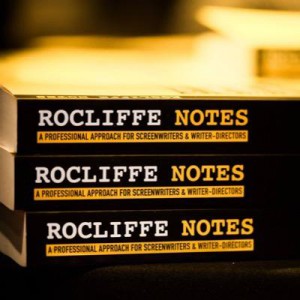
Farah Abushwesha knows a thing or two about how writers write. As a writer and filmmaker herself, she’s also spent the past 15 years heading up the BAFTA Rocliffe New Writing Forum where she helps emerging writers get noticed and forge a career. With a new book about script and screen writing, we asked Farah for her top tips on making it as a writer.
Farah’s book, Rocliffe Notes: A Professional Approach for Screenwriters & Writer-Directors, came out of her well read blog and contains a wealth of advice from her and interviews with more that 150 other writers, directors, commissioners and producers on how to take a ‘professional approach’ to the business of writing.
 Writing the book, says Farah, has really made her appreciate the generosity of other filmmakers – and how much they want to support new talent. Although she also stressed that this doesn’t mean that they’ll all have time to read your unsolicited script! So, how should a new writer approach writing and what did she learn whilst writing the book?
Farah’s 9.5 top tips on making it as a scriptwriter:
1. Know your ‘creative DNA’
When you’re starting out it’s important that you experiment with different writing styles and get to know what you really love writing – both the genre and the form. I’m interested in strong female characters and the supernatural – and I always gravitate towards these kinds of themes in my personal projects.
2. Read all you can read and study the form
You don’t need anyone’s permission to write or make films but you certainly have to practice the art of writing – and really get to grips with the form you want to write. I’m always amazed when I meet writers who don’t watch TV or don’t seem to read scripts in their area.
3. Have more than one idea
If you want to write for yourself – that’s great – but if you want to write for a career you’re going to need more than one idea or one screenplay. Don’t commit to one script, commit to a career – have lots of ideas and keep pitching them.
 4. Get yourself noticed
It’s really important that new writers get out there and ensure their work is seen. There are lots of development courses, competitions (like ours) and other regional initiatives that writers can apply to. And, if you do send in an extract of your work – make it your best work, not just the first ten pages.
5. Make something – you don’t need permission
Often the only person holding you back is you. There’s no excuse for not having work out there. Put on a play, make a podcast, shoot a short film practice makes perfect and hopefully proves you have talent – and not just initiative.
6. Lay aside your anger at not getting discovered yet
There’s nothing more damaging to a writer than getting bitter about not getting noticed – it can lead to a real spiral of negativity. Rejection is never easy (we all have experienced it) but the best writers learn from their rejection and then move on. Be courteous in accepting rejection – never be rude - people can have long memories!
7. Know who makes what
Know the house styles of different production companies and channels and get to know the kinds of shows they make. Don’t ever turn up to a meeting where the person you meet has to explain what they do - DO THE RESEARCH - ask yourself whether your works fits with their style.
8. Know why and who you’re asking for feedback
When you are asking people to read your work, is it for feedback, representation, a commission, work, money and can they give you that? You need to know why are you asking them in particular to read your work? Don’t expect them to read it over night - allow 4-6 weeks.
9. When they respond, listen to the feedback
It’s quite common for writers to only hear the feedback they want to hear. It can take you a good two hours to read a script, make notes and send it back – so you’re asking for quite a lot of time. If you’re asking a writer to feedback – you’re taking them away from their own writing so listen to their feedback and try not to be defensive over your work.
9.5 And always, always, say thank you
Not enough people do this and it’s really important!
***
The BAFTA Rocliffe New Writing Forum holds events across the year and their competitions showcase work for TV drama, children’s writing and film. The comedy showcase sees the winners whisked off to pitch their show ideas to a New York audience. Part of the initiative is that writers get industry introductions, support which can potentially launch careers. Currently, BAFTA Rocliffe is calling for TV drama scripts and there are scripts calls for comedy, film and writing for children later in the year.


Follow Write-Track for writerly news and updates